EXHIBITION・EVENT

IN SESSION

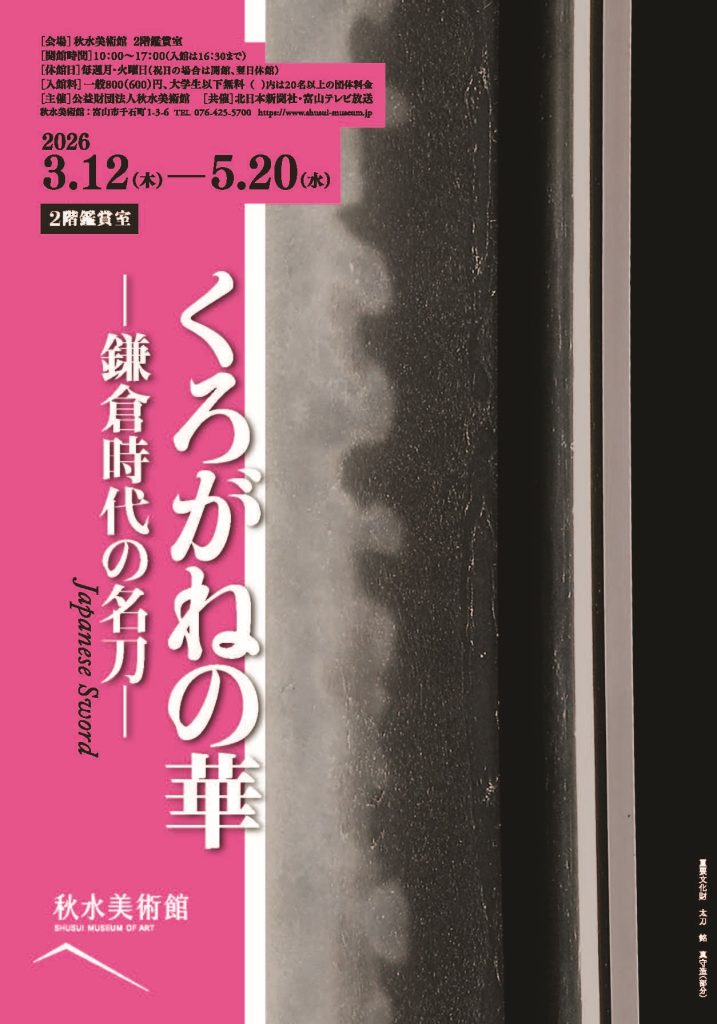
Blossoms of Iron — Masterworks of Kamakura-Period Swords —

Thursday, March 12, 2026 – Wednesday, May 20, 2026 2rd floor exhibition room

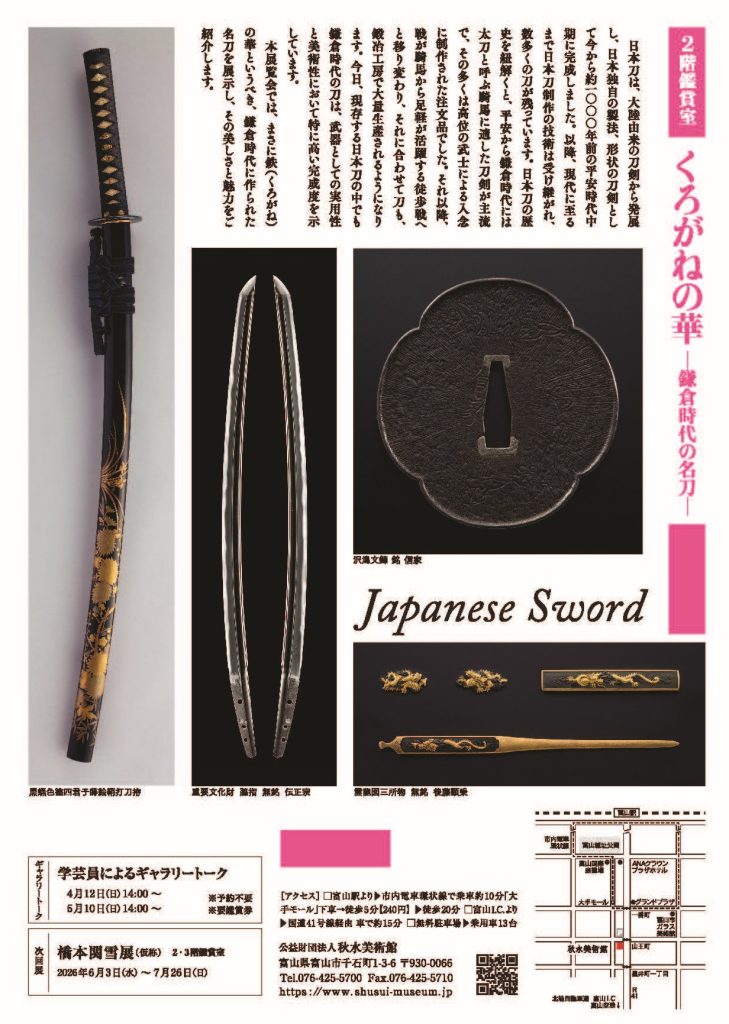
The Japanese sword evolved from continental blades to develop into a weapon of distinctly Japanese craftsmanship and form, reaching its definitive shape during the Mid Heian period (ca. 900–1050) — approximately one thousand years ago. The tradition of Japanese swordsmithing has been passed down unbroken to the present day, and a great number of swords survive from across the centuries.

Tracing the history of the Japanese sword, the Heian (794–1185) and Kamakura (1185–1333) periods were dominated by the tachi — a long, curved sword designed for mounted combat. Most of these were meticulously crafted as commissioned works for high-ranking warriors. As warfare gradually shifted from cavalry engagements to infantry battles in which foot soldiers played the central role, swords too changed accordingly, eventually being produced in large quantities in smithing workshops.

Among all surviving Japanese swords today, those from the Kamakura period (1185–1333) stand as particularly outstanding achievements, combining exceptional functional excellence as weapons with remarkable artistic refinement.

This exhibition presents a selection of masterwork swords forged during the Kamakura period (1185–1333) — true blossoms of iron — inviting visitors to discover their enduring beauty and timeless appeal.

Exhibition information

Date/Venue Thursday, March 12, 2026 – Wednesday, May 20, 2026
2rd floor exhibition room
Open 10:00-17:00 (admission until 16:30)
Closed Closed Mondays and Tuesdays (except national holidays, when the museum is open and closed the following day).
Admission Adults 800 (600) yen, University students and younger: Free ( ): Group rate for 20 or more people
IN SESSION

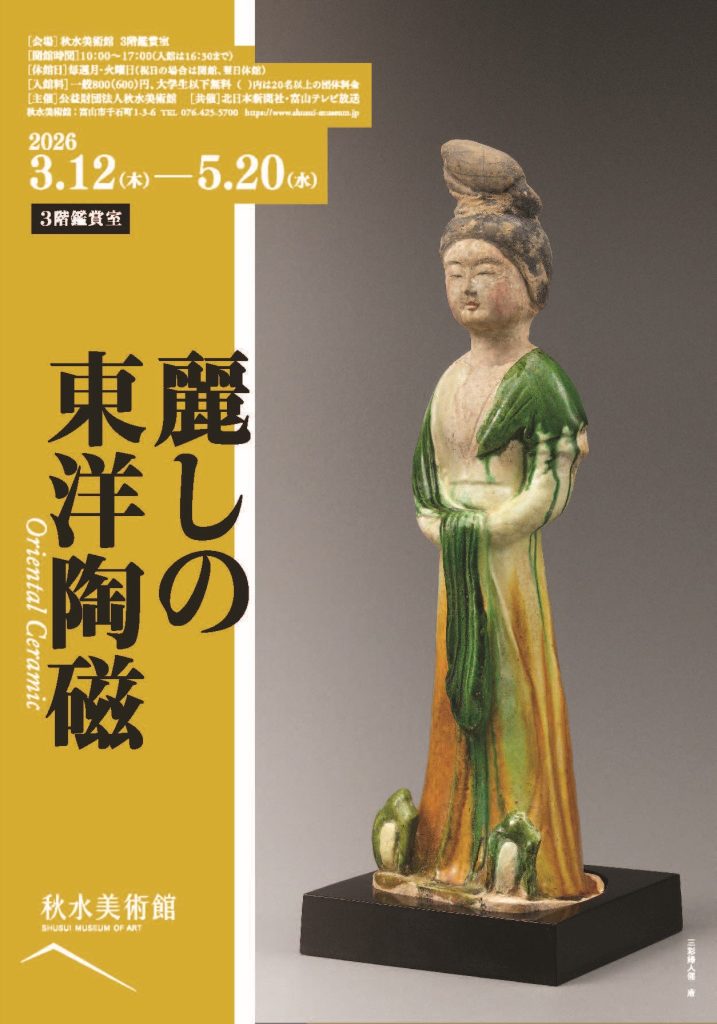
The Beauty of East Asian Ceramics

Thursday, March 12, 2026 – Wednesday, May 20, 2026 3rd floor exhibition room

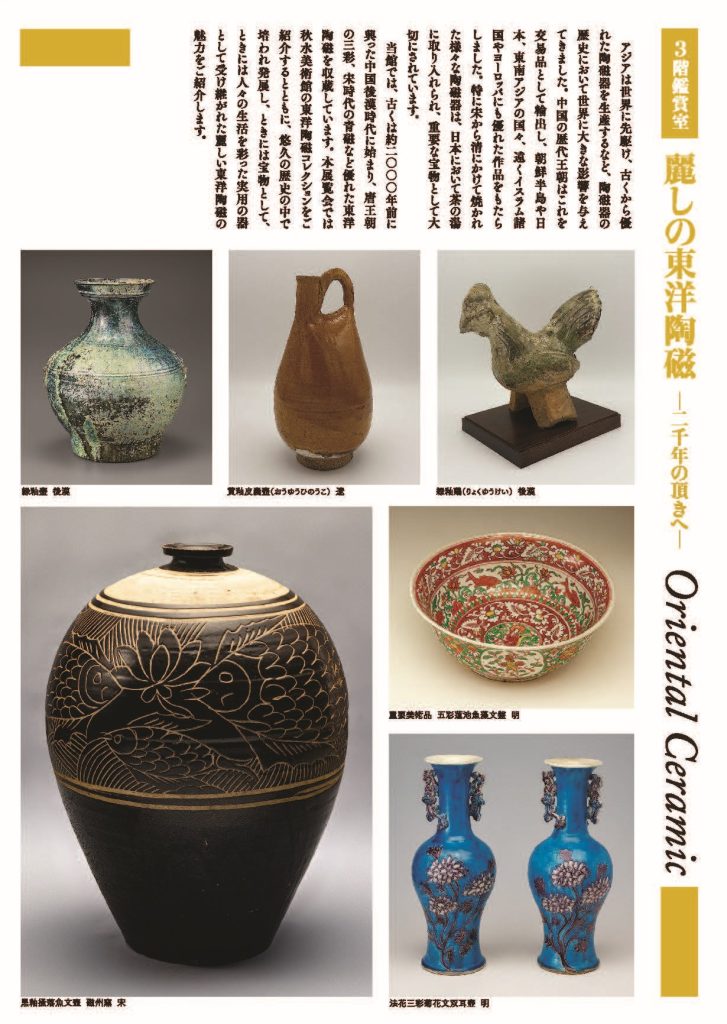
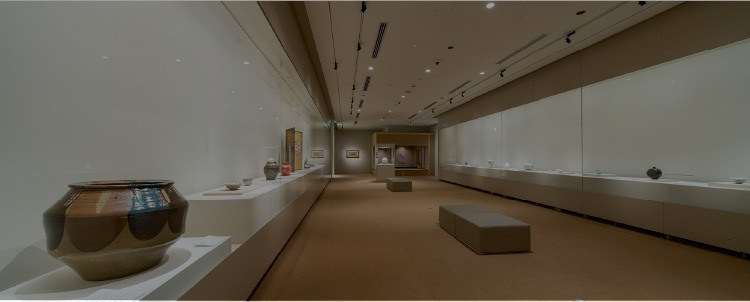
Asia, ahead of the rest of the world, has long played a formative role in the history of ceramics, producing outstanding wares from an early date. Successive Chinese dynasties exported these works as goods for trade, bringing superb ceramics not only to the Korean peninsula, Japan, and the nations of Southeast Asia, but also far afield to the Islamic world and Europe. In Japan in particular, a wide range of ceramics fired from the Song through the Qing dynasties were embraced within the culture of chanoyu (the tea ceremony) and treasured as important objects.

Our museum holds notable East Asian ceramics, from works dating back roughly two millennia to the Eastern Han period of China, to Tang-dynasty sancai (three-color wares) and Song-period celadons. This exhibition presents the Shusui Museum of Art’s East Asian ceramics collection while also tracing the history and allure of these traditions—shaped and refined over the course of the ages—cherished at times as precious treasures, and at other times passed down as utilitarian vessels that enriched the fabric of daily life.

Exhibition information

Date/Venue Thursday, March 12, 2026 – Wednesday, May 20, 2026
3rd floor exhibition room
Open 10:00-17:00 (admission until 16:30)
Closed Closed Mondays and Tuesdays (except national holidays, when the museum is open and closed the following day).
Admission Adults 800 (600) yen, University students and younger: Free ( ): Group rate for 20 or more people